
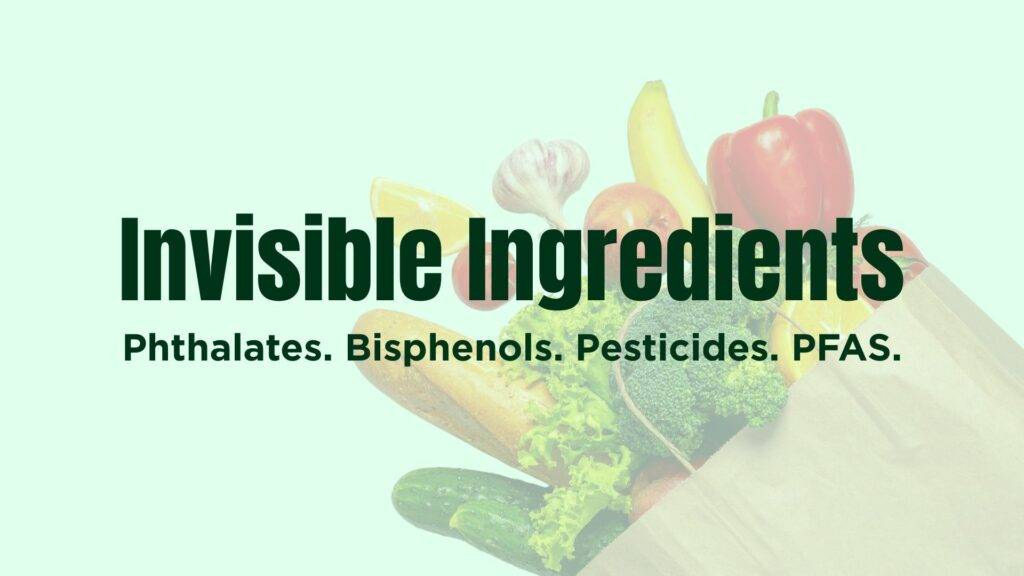
I recently read a report that stopped me in my tracks. Chemicals in food is not a new thing in this age. But this report clearly laid out something you sense but struggle to articulate: the chemicals in our food, and our food system aren’t a minor concern. They’re deeply embedded in how food gets produced, processed, packaged, stored and maybe even shipped.
The report is called Invisible Ingredients, released by Systemiq in December 2025. It’s the most comprehensive look so far at how four major chemical groups are affecting our food system and, by extension, our health.
Let me walk you through what stood out to me and, more importantly, what this actually means for you as someone navigating grocery aisles and making daily food decisions.
Note: chemicals in food in this context is not the original chemical makeup of the food itself.
The four chemical groups you’re likely exposed to
The report focuses on four chemical groups that have become pervasive in our food system:
- Phthalates: commonly found in plastic packaging, food processing equipment and disposable gloves
- Bisphenols: used in food containers, can linings, and various food contact materials
- Pesticides: used in agriculture and found as residues on fresh produce, in soil and in water
- PFAS (forever chemicals): found in food packaging, cookware coatings and some pesticides
These aren’t fringe chemicals used in rare unheard of industrial processes. They’re in fertilizers, pesticides, processing equipment, food packaging, cookware, and more. Guardian’s coverage of the report says that these chemicals help underpin the current food system.
That phrase is memorable in a not-so-good way. It means removing them wouldn’t just require minor adjustments. It would fundamentally change how food is produced and delivered to your plate.
The cost is trillions in health and environmental damage
According to the analysis, these four chemical groups are responsible for an estimated $1.4 to $2.2 trillion in annual healthcare costs globally. That’s 2-3% of global GDP just in health-related expenses from chemical exposure through food. That’s sobering.
Add another $640 billion in environmental damage, including soil degradation, water contamination, and biodiversity loss, and you’re looking at nearly $3 trillion in total annual harm.
We’re not exposed to these chemicals in isolation
One argument you’ll often hear is that the residue levels in any single food item are too low to cause harm. In isolation, that might be true.
But we’re not exposed in isolation. These chemicals are in food, water and air every day. They accumulate. Studies have found them in human tissues. One that never ceases to surprise me is their presence in breastmilk and placenta. And for PFAS, they don’t break down significantly in the environment or in bodies. They just keep building up.
The report even suggests that if current exposure levels continue, there could be 200 to 700 million fewer births globally between now and 2100 due to fertility impacts. No region is spared. Meanwhile, low population is already a problem, so this adds up to that problem.
How these chemicals are degrading agriculture
These chemicals boost short-term intensive food production. Pesticides increase crop yields. Plastic packaging extends shelf life. But they also erode the soil, contaminate water sources and disrupt the ecosystems that agriculture ultimately depends on.
The report found that roughly 80% of global farmland now carries pesticide residues. Pesticide-laden runoff has led to fish harvest crashes of up to 90% in some affected areas. And 600 wildlife species have confirmed PFAS in their tissues.
This seems like a trade-off we’ve been making, often unknowingly, for decades.
The label problem: what “organic,” “clean,” and “non-Toxic” actually mean
Some action has been taken over the years. The EU restricted the use of some phthalates in consumer goods in 2018. And has also been working on PFAS restrictions. But progress is slow. And even restricted chemicals continue to linger in the environment for decades.
In the meantime, consumers are left to navigate food labels like “organic”, “clean” and “non-toxic” often without clear standards behind them.
“Organic” has regulatory meaning. In the US, USDA Organic certification means the food was produced without synthetic pesticides and fertilizers. But some natural pesticides are allowed and contamination from neighboring farms can occur.
“Clean” is a marketing term with no legal definition. It can mean almost anything the manufacturer wants it to mean.
“Non-toxic” is similarly vague. There’s no regulatory body checking whether a product truly deserves this label.
So the burden of decoding falls on you, in the grocery aisle, with limited time and information. It’s overwhelming some times.
Here’s what you can do about chemicals in food
It’s almost impossible to say you want to stop all these from happening. You can’t control the entire system all at once at this level. But you can control some things at your end. Here are some simple steps you can take to manage your exposure to these chemicals in your food:
1. Reduce plastic contact with food
Heat breaks down plastic chemicals and makes them leach into food. And overuse of plastic can release microplastics. So that’s one exposure point you can actually control. Avoid microwaving food in plastic containers, maybe even those labeled “microwave safe” if possible. Transfer hot takeout food from plastic containers to glass or ceramic dishes. Let food cool before storing in plastic, or better yet, use glass containers. Reconsider your use of plastic cutting boards.
2. Be strategic about organic purchases
If budget is a concern (and for most of us, it is), prioritize organic for items you eat frequently and those known to have higher pesticide residues, like leafy greens. For items with thick peels you remove, like bananas or avocados, conventional might be ok.
[pic: list of foods known to have high levels of pesticides from conventional farming]
3. Consider filtering your water
PFAS and pesticides can be present in tap water. A quality water filter, particularly one that can remove PFAS, can reduce this exposure pathway. This will be even more relevant if you drink your tap water. Look for filters certified to reduce PFAS compounds.
4. Wash fresh produce thoroughly
This won’t eliminate all pesticide residues, especially those absorbed into the food. But it can reduce surface contamination. A simple rinse under running water for 30 seconds helps. Some use a vinegar solution for additional cleaning.
5. Explore variety in your diet
Eating a variety of foods from different sources can help reduce the risk of accumulating high levels of any single contaminant. If you can, don’t eat the same foods from the same sources every day for a long period of time.
6. Use your demand as a signal
Whatever you demand is what the system provides you. Your purchasing choices send signals up the supply chain. For instance, if you demand locally grown produce, that’s what you would likely get. You’ll then be calling shorter supply chains that typically require less packaging and fewer preservatives.
On a positive note, change to this situation is possible
According to the report, existing policies and technologies could reduce harm by about 70%. That means change is possible with what we already have. But this change needs focused action from regulators, brands, consumers and the systems that made these chemicals invisible in the first place.
The report calls for a shift from “aftermarket proof of harm” (where chemicals are used until they’re proven dangerous) to “premarket proof of safety” (where chemicals must be proven safe before use), similar to how pharmaceutical drugs are regulated. This shift and whatever action anyone takes, starts with acknowledging that the problem exists.
Key takeaways for you as a consumer
- Chemical exposure is cumulative. Individual low doses add up over time across food, water, and air
- “Clean” and “non-toxic” labels are marketing terms with no regulatory standards. “Organic” has meaning but doesn’t mean chemical-free
- Heat accelerates chemical leaching from plastics. Avoid using plastic with hot food
- Prioritize organic for high-pesticide produce if budget allows, especially items you eat frequently.
- Systemic change is possible with existing technologies and policies. Individual choices matter, but so does advocating for better regulation
- Diversify your food sources to avoid accumulating high levels of any single contaminant
So where does this leave us?
The Invisible Ingredients report paints a challenging picture. These chemicals are deeply embedded in our food system and that’s not going to change overnight. But awareness is the first step. Now you know what these chemicals are, where they come from and some simple steps to manage your exposure. The overwhelm is already too high so perfection isn’t the goal. Make the changes you can at where you are.

Etornam is a Food Systems Research Engineer with a generous passion for healthy food. She’s the Founder of FoodPulse, a speaker and currently conducts doctoral research at McGill University on consumer food systems. She helps the everyday consumer navigate the modern food environment with confidence. She loves teaching, gardening and developing new recipes. Learn more by Etornam